
It was the beginning of 2023 when Genesis started looking for videos about autism on TikTok, when she noticed that Ghael, her little son of 1 year and 2 months, was unsociable and did not respond to his name, which generated an alert about the proper development of her child. In search of answers to her doubts, Genesis arrived at the Jorge Lingán health post in Carabayllo, where moms from the local community go with their children to receive their vaccination schedules and their Growth and Development Checkups (CRED).
It is here that the paths of Genesis, Ghael, and the community intervention in early childhood development, CASITA, crossed at the right time: through the Child Health project, Socios En Salud (SES) identifies children who need to strengthen their skills according to the results of the CREDs, in coordination with health facilities such as Jorge Lingán.
From that moment on, CASITA, which performs an intervention on children with risk or developmental delay, starts a screening work to identify potential participants in the community, through a list of children provided by the health facility and censuses applied by the team in the intervention areas and based on the Psychomotor Development Evaluation Scale (EEDP) test for children under 2 years old.
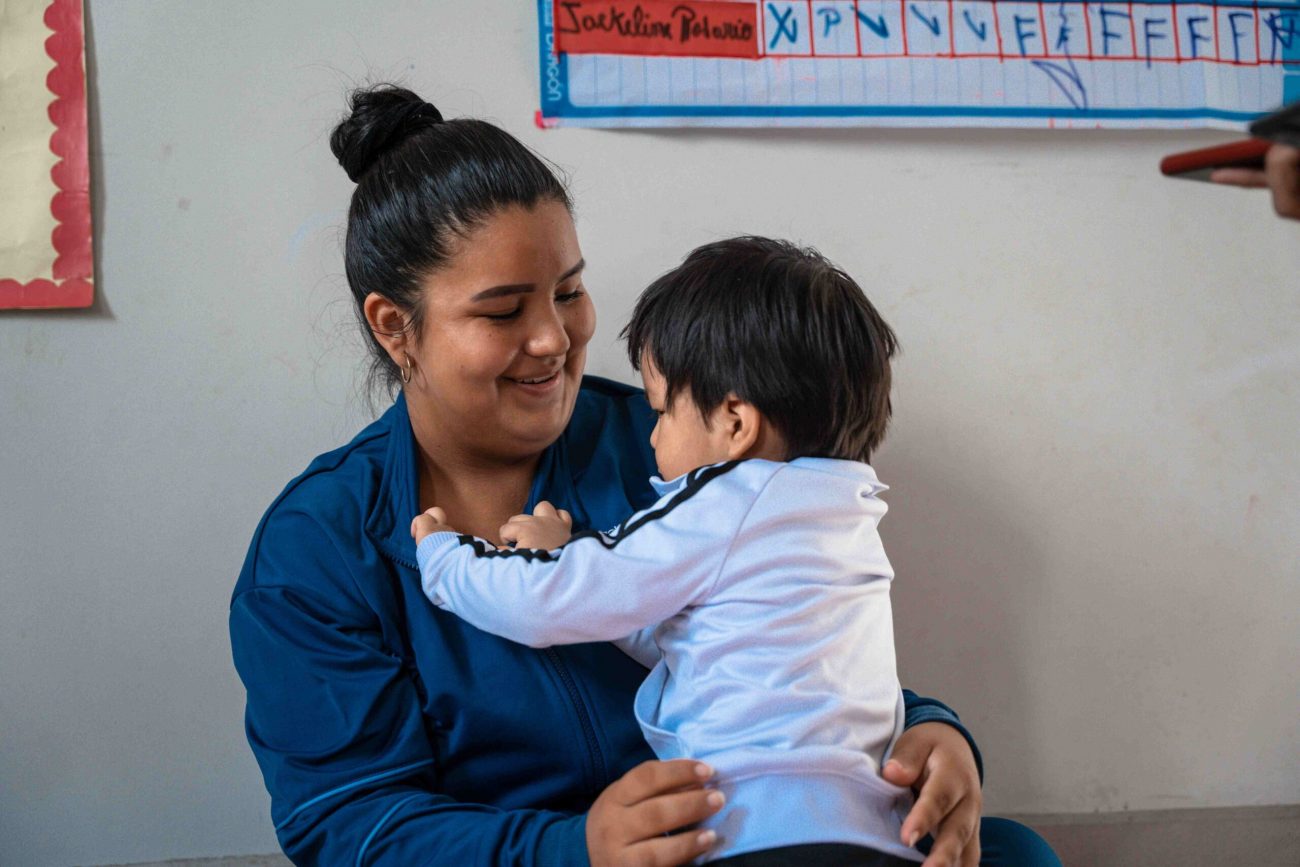
“It’s a follow-up for which I am grateful,” Genesis comments on the contact she still maintains with community agent Cristina Núñez. Photo by Monica Mendoza / PIH
In Ghael’s case, her EEDP result showed developmental delay, and Genesis responded immediately to the invitation to participate in CASITA.
“They gave us the date to come here and I started bringing him, he didn’t miss a single session,” proudly mentions Genesis, who since February of this year made a commitment to bring Ghael to each of the 12 CASITA sessions at the 28 de Julio community center in Carabayllo.
The vital role of the CASITA community agents
At CASITA, the community health agents (ACS) are trained by SES in child development methodologies, early stimulation, socioemotional support for caregivers, among others, to lead the 12 weekly sessions of the project. This allows them to be trained to identify risk factors or alerts in children, and prioritize activities that need to be reinforced over others.
Ghael’s case did not go unnoticed by Cristina Núñez, the community agent who led the CASITA group where ‘Ghaelito’, as she affectionately calls him, participated. She remembers as if it were yesterday his first sessions.
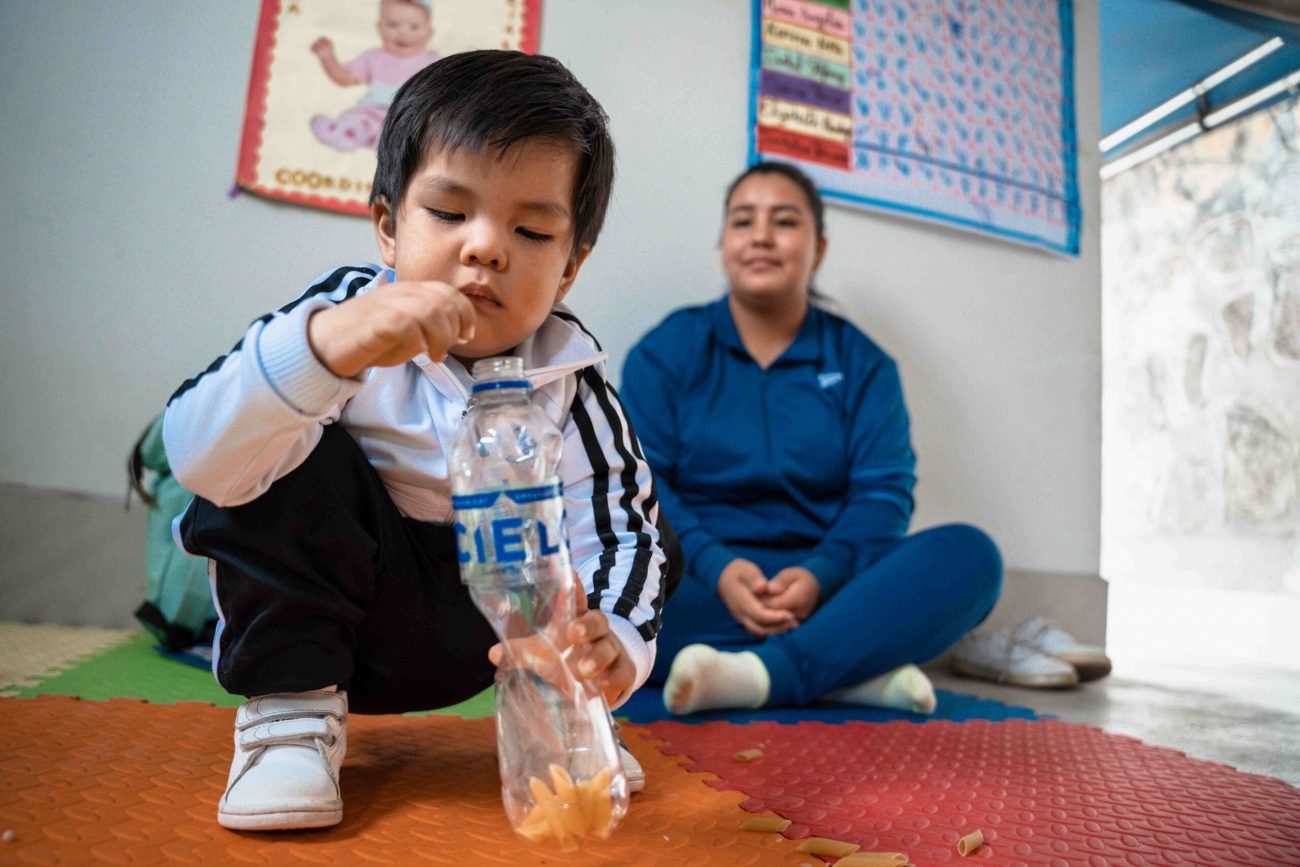
Activities such as playing noodles with the bottle have improved Ghael’s coordination. Photo by Monica Mendoza / PIH
“He didn’t want to socialize, or for anyone to talk to him or look at him, he would run away from the games,” says Cristina. She also identified that the language area was where she needed the most work, since she couldn’t pronounce syllables or whole words.
Cristina alerted the Child Health project to what was happening, and as there was a previous evaluation from the psychology service at the Jorge Lingán health post that referred Ghael to a specialist, the SES team reinforced the importance of timely care. From that moment on, Genesis received accompaniment so that the health post would begin the process of referring her son to Pro’s Los Olivos Rehabilitation Medicine Center under suspicion of autism.
Meanwhile, Ghael continued with his CASITA sessions. Until the fifth session when something happened.
“I was sitting chatting with the moms, when suddenly Ghael stood up and came to hug me tightly,” recalls Cristina, who doesn’t hide the joy she felt the day she saw him socialize more freely.
Since then, Genesis noticed significant improvements in her little son: he began to pronounce vowels, to be more sociable with other children, and to concentrate on CASITA activities that stimulated his motor and coordination area.
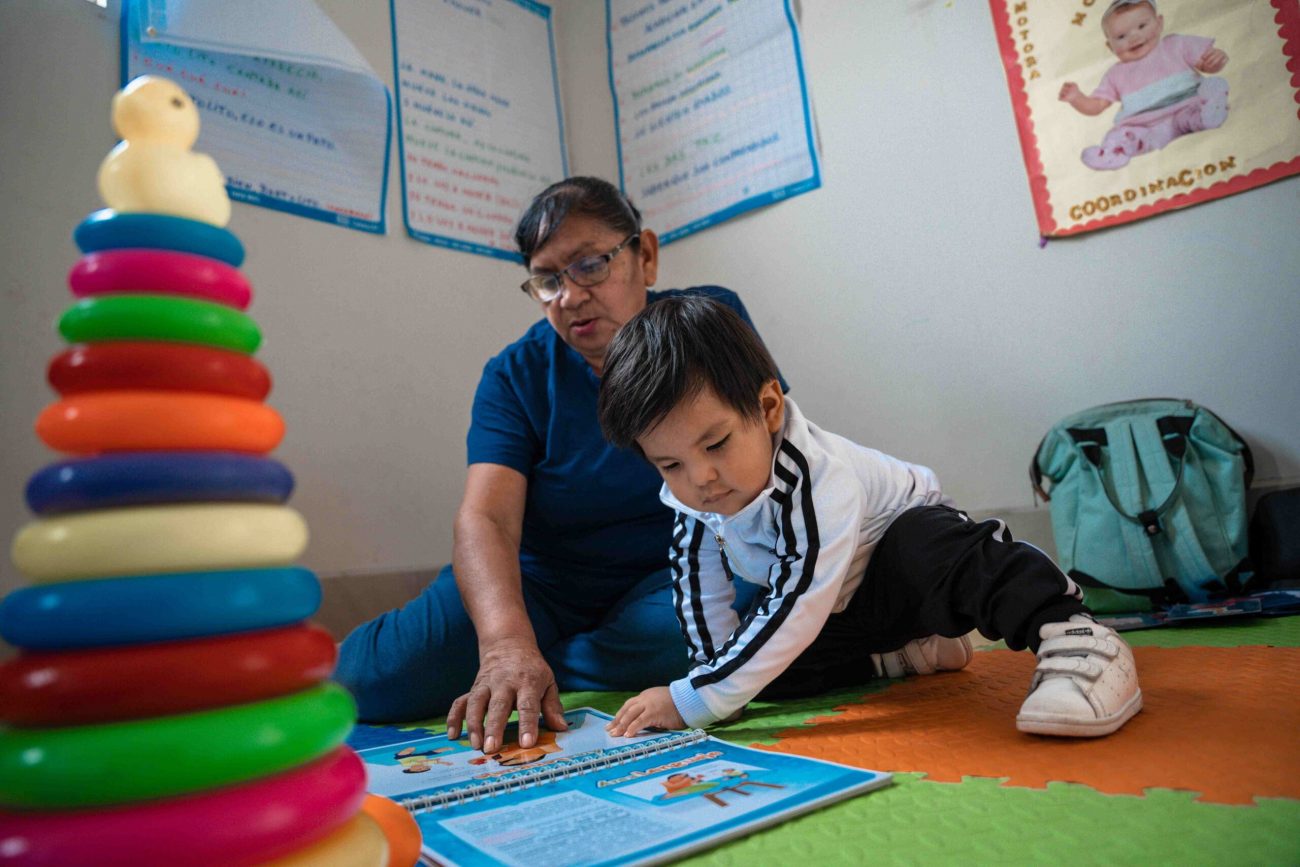
The CASITA modules stimulate areas such as motor, social, coordination and language in children. Photo by Monica Mendoza / PIH
A new chapter
Ghael became the first CASITA participant to be referred to a Medical Rehabilitation Center, where from May 31 he will undergo 10 sessions of speech therapies. At the conclusion of these sessions it will be possible to determine if he should be seen by a pediatric neurologist, who provides the final diagnosis of autism.
According to the Ministry of Health (MINSA), the COVID-19 pandemic caused many children to lose socialization and stimulation scenarios as a result of the mandatory quarantine, which has impacted language development.
Ghael is one of those children: he was born in June 2021.
“The more timely the detection, the faster the therapies and treatment so that the child can establish or pronounce words better,” says Keysi Caque, chief physician of the Jorge Lingán health post. The specialist also mentions that there are not few parents who come with children 3 or even 4 years old with difficulties in pronouncing words and forming sentences, who believe that this is totally normal.
That is why timely enrollment in projects such as CASITA is key so that the early childhood development of children like Ghael is not compromised, as well as the early detection of risk factors in the eyes of community agents. All of this, coupled with the commitment of caregivers and mothers like Genesis, can change the future of children in the country’s most vulnerable communities.
“Socios En Salud is always supporting and it is very good for the community,” stresses Dr. Caque.