In the Amazon region, HIV currently has the highest rate in the country, with almost 95 cases per 100,000 inhabitants, almost four times the national average. Behind this figure there are indigenous communities with limited access to health services, territories that are difficult to connect and a historical gap in care that still persists in rural areas of the Peruvian Amazon.
In 2019, an official study showed that HIV affected the Awajún and Wampis peoples more strongly than the rest of the country. In the Awajún communities,almost 2 out of every 100 people had the virus-a prevalence rate six times higher than the rest of the country-while among the Wampis the figure was lower, but equally worrying. The result set off alerts about a reality that had been growing for years without sufficient attention.
During the pandemic, as happened in so many other places, prevention stopped, screening was reduced and health routes were interrupted. When the world reappeared, HIV came back with a vengeance: between 2022 and 2023 alone, about 415 new cases were registered in Amazonas. It was there, at that tipping point, that the Amazon again demanded a different response.
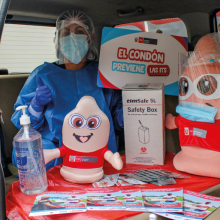
That response took the form of brigades and intercultural dialogue. The Ministry of Health (MINSA) leads this territorial strategy, while Socios En Salud, within the framework of the TB-HIV Country Project 2022-2025 and with co-financing from the Global Fund, contributes toensuring its sustainability by recruiting and strengthening the human team in the territory, allowing care to continue uninterrupted.
Mobile HIV Brigades in the Amazon
No health intervention is possible in the Amazon without prior negotiation with the territory. Before doctors, words come first. That is why the entrance to the Awajún, Wampis and Asháninka communities is done through an Intercultural Dialogue Team, made up of a doctor, an anthropologist, a communicator and an indigenous technician. They present the strategy, talk with community authorities, translate, explain and listen.
Then come the brigades. Four Amazon Mobile Brigades, equipped with four boats, called chalupas, and full staff - doctor, nurse, obstetrician, indigenous technician and motorist - plus a sociologist who accompanies the intercultural work. It is not just a health operation: it is a logistics of trust sustained over time.
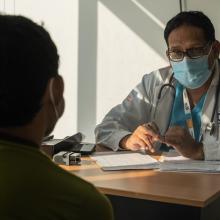
To date, the intervention has made it possible to carry out 56,220 HIV screenings and provide 41,612 comprehensive care services in indigenous communities in the Amazon. This comprehensive care includes general medical consultations, nutrition, screening for sexually transmitted infections (STIs), as well as other services according to local demand.
In many cases, this is the first time that a community has had simultaneous access to prevention, diagnosis and continuous medical care. Each brigade day thus becomes a starting point for a more stable relationship between the health system and the territory.
A response that has already changed the landscape
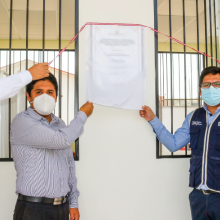
Today, thousands of people in historically excluded areas know their HIV status. Entire communities have been comprehensively intervened for the first time. Local health teams have been strengthened. Indigenous technicians have been trained. River routes have become health routes.
Unlike previous experiences, this intervention is not episodic. It is intended to be sustained over time, until 2025, allowing follow-up, control and capacity building. The difference between coming once and staying is, in public health, the difference between an anecdote and a transformation.
On this World AIDS Day, the success is not only in the figures - although 56 thousand screenings and more than 41 thousand comprehensive care are convincing-, but in something less visible: in the idea, still young but firm, that living with HIV does not mean living on the margins.
Somewhere along an Amazonian river, a boat moves forward with rapid tests, vaccines, clinical records and ice to preserve samples. It also moves forward with a simple and powerful idea: that health should not be a geographical privilege. And that accompaniment, when it is real, also heals.