
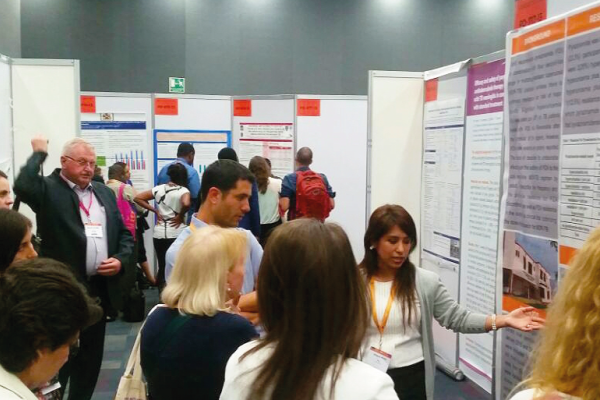
Socios En Salud participated in the 48th Union World Conference on Lung Health, which took place at the Expo Guadalajara environments in the city of Guadalajara, Mexico, from October 11-14, 2017. This event brought together researchers, civil society advocates, scientists, health professionals and students working in all aspects of lung health, under the theme “Road to Elimination”.
The conference theme this year built on the momentum of the Liverpool conference, bringing together 4,000 delegates from 100 countries to achieve the ambitious goals that have been set for the global lung health agenda.
In addition, the conference focused on how to accelerate elimination from multiple fronts such as tuberculosis (TB) and co-infections, improve tobacco control and reduce air pollution.
This four-day event was a vital meeting place for all those working in lung health, including TB, and featured diverse forums to share knowledge and unify commitment to those actions that will make the greatest strides in public health.
First roadmap to jointly curb the transmission of bovine and zoonotic tuberculosis
The first roadmap to combat animal tuberculosis (bovine tuberculosis) and its transmission to humans often through the consumption of untreated contaminated meat or dairy products called zoonotic tuberculosis , calls for close collaboration between those working to improve human and animal health.
This has been developed under the “One Health” approach, addressing sectors at health risk. The Roadmap for Zoonotic Tuberculosis was launched at the 48th Union World Conference on Lung Health.
The four partners, the World Health Organization (WHO), the World Organisation for Animal Health (OIE), the Food and Agriculture Organization of the United Nations (FAO) and the International Union Against Tuberculosis and Lung Disease (The Union) have joined forces to develop the roadmap and address the health and economic impact of this disease.
New data released by the World Health Organization (WHO) estimates that more than 140 000 people fall ill and more than 12 000 people lose their lives each year to zoonotic tuberculosis, mostly in the African and Southeast Asian regions. Bovine tuberculosis is most often transmitted to humans through the consumption of food, usually non-heat-treated dairy products or raw or undercooked meat from infected animals. Direct transmission from infected animals or animal products to people can also occur.
Research studies demonstrate progress in the search for new TB diagnostic and treatment options
- Wireless Observation Therapy (WOT) is accurate and confirms more delivered and taken doses of MTB drugs than DOT.
- Molecular analysis of bacterial load as a marker of treatment response has potential in the routine care of patients on TB treatment.
- The cell wall lipid metabolites of Mycobacterium tuberculosis have potential utility as biomarkers of treatment response.
- Maintaining the recommended age for BCG vaccination would prevent about 5 000 to 30 000 deaths per year of vaccination.