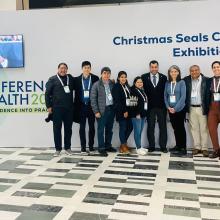

Each year, Socios En Salud participates in The Union Conference, the world’s most important scientific event dedicated to tuberculosis (TB). In its 2025 edition, the organization presented a study that addresses a persistent problem in Peru: many people with TB symptoms first seek care in private clinics, even though treatment is only provided in the public system. This choice affects the speed with which the disease is diagnosed and treated.
The study is part of Socios En Salud’s commitment to generate evidence that improves health policies and makes it easier for affected people to receive timely, quality services. In a country where TB remains a public health problem, understanding how people decide where to seek care is critical to closing gaps, improving collaboration between the public and private sectors, and moving towards disease control.
During the presentation, the research team explained that the central question of the study was to identify what perceptions about private services motivate people to go there first and whether this choice generates delays in initiating TB treatment. This information is key to guiding strategies to improve the Peruvian health system.

Ana Karina Millones, coordinadora de proyecto en el programa de Tuberculosis de Socios En Salud, presenta los hallazgos de SES en la conferencia anual The Union.
Foto de SES
Key findings presented at The Union Conference
Between 2024 and 2025, researchers interviewed 473 people aged 15 years or older with tuberculosis at 30 health centers in Lima. The results showed that approximately 4 out of 10 people went to private clinics first, mainly because they were closer to home.
Those who considered the private sector to be closer were 1.5 times more likely to go there first. Importantly, this decision did not delay the start of treatment, although it did result in them having to go for more visits before receiving a diagnosis.
As for what they value about each system, people prefer the private sector for speed of care and convenient hours, while in the public sector they emphasize proximity and lower costs. This helps to understand how the characteristics of each system influence the decision of where to go first when having TB.
Implications for TB control in Peru
The presentation emphasized that choosing the private sector is not related to perceived quality, but to proximity. Therefore, strengthening referral mechanisms from private clinics to the National Tuberculosis Program is essential to ensure timely diagnosis and treatment.
In addition, expanding the availability of public services in peripheral areas could reduce the need to go to the private sector first and improve the speed of access to treatment. For Socios En Salud, this evidence will be useful in designing future interventions that bring services closer together, strengthen public-private partnerships and continue to make progress toward TB elimination in Peru.