In September 2025, Socios En Salud (SES) launched the “Depression Won’t Wait. Neither can we”, a solidarity initiative that sought to expand access to mental health care for the elderly, a group particularly affected by isolation, loss and lack of timely services. Thanks to the support of donors, it was possible to bring psychological accompaniment to those who needed it most.
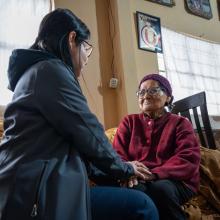
Between October and December 2025, the Mental Health program of SES visited 81 elderly people, achieving total coverage of the identified group. Of these, 50 people (62%) presented some level of depression and received direct care in their homes, demonstrating the importance of early detection and community accompaniment to address this condition.
All identified older people with depression (100%) accessed psychological therapies. A total of 33 received psychoeducation sessions by program psychologists, while 17 participated in the “Kusi Tayta” model, an intervention based on behavioral activation, developed during nine sessions by trained community health agents. In addition, three seniors with suicidal ideation were immediately referred to health facilities for emergency care.
Thirty-three seniors received psychoeducation sessions by SES psychologists, while three with suicidal ideation were referred to health facilities for emergency care.
Depression in the elderly: an invisible problem
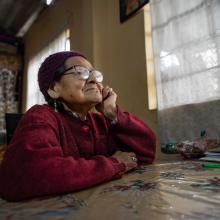
Before she turned 80, Olga Ijuma began to lose her appetite and the desire to get out of bed. The death of her husband and a diagnosis of pulmonary fibrosis compounded a malaise that deepened during the pandemic. “I spent a lot of time alone,” she recalls. It wasn’t until this year that she was able to put a name to what she felt: depression.
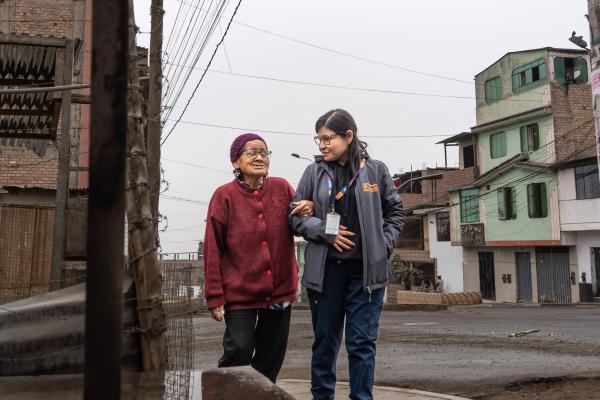
Like many older people, Olga lived with the disease in silence. For years she had been a community health agent in Carabayllo, but confinement disrupted her routines and reduced her contact with others. The situation began to change when she joined an initiative of the SES Mental Health program, inspired by the international Do More, Feel Better model, which promotes reconnection with meaningful activities to regain her spirits.
Every week, a community health agent would visit her at home. They would chat, assess how she was feeling and leave small tasks: pupiletras, drawing, creative exercises. “Over time I started to feel calmer, with more encouragement. I didn’t feel so lonely anymore,” Olga says. Today she is back to getting up early, reading, attending the senior center in her area and cheering on Universitario de Deportes with renewed enthusiasm.
Olga’s experience reflects the impact of the campaign. “Depression doesn’t wait. Neither do we” demonstrated that, with close and community accompaniment, it is possible to restore movement, meaning and hope to the lives of the elderly.