Mental health has become one of the major public health concerns in Peru. Economic stress, citizen insecurity, family overload and post-pandemia have silently increased cases of depression, anxiety and suicidal ideation in urban centers and peripheral areas. Faced with this reality, most people take years to receive timely diagnosis or intervention, which aggravates suffering and collapses specialized services.
In this context, the Mental Health Program of Socios En Salud (SES) has developed a community model that brings care closer to the territory, identifies early signs and accompanies people throughout the care process. In the last year, 22,940 people were screened, of which 11,737 were diagnosed with a mental health condition. This early identification is key to preventing complications and encouraging continuity of treatment.
The reality behind these figures shows that depression and anxiety remain the predominant diagnoses. Of all the people screened, 7,123 presented signs or symptoms of depression, 7,264 of anxiety and 796 signs compatible with suicidal ideation. These data reveal the need to strengthen community mental health and to expand strategies focused on accompaniment, closeness and active listening.

Psychological care and referral to the health system
One of the pillars of the program is the bridge it builds between the community and public health services. Thanks to this model, 6,865 people were referred to the health system for specialized care, ensuring that those who traditionally do not have access can start treatment. At the same time, 9,744 psychological care was provided directly by the Socios En Salud team, offering constant clinical and emotional support.
In addition, 2,517 people received direct care from SES psychologists. In a country where the coverage of mental health professionals is still limited, these interventions represent a significant expansion in the local therapeutic offer. This approach prevents depression, anxiety or suicidal ideation from evolving into severe crises or risky situations.
Continuity of care is an essential component. A diagnosis is useless without follow-up, and therefore, community accompaniment becomes the most transformative element. Constant presence in the territory helps to ensure that people do not abandon treatment, to identify relapses and to strengthen family support networks.
More than 2,500 people received direct care from Socios En Salud psychologists in the last year.
Community accompaniment: the heart of the mental health response
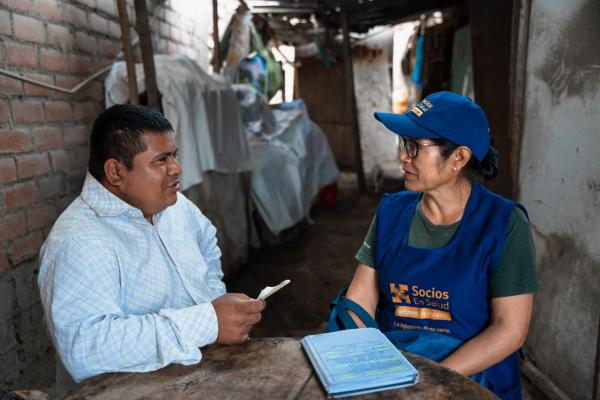
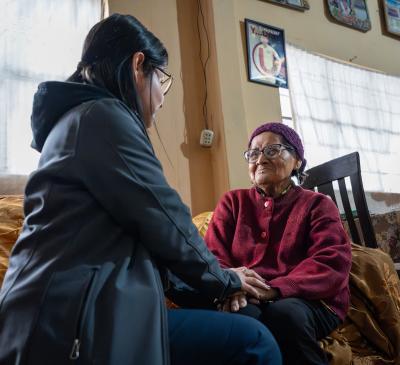
The program has community health agents specialized in mental health, who accompanied 7,227 people through home visits and psychosocial follow-up. Their role is vital: they are the first to detect behavioral changes, emotional deterioration or risks associated with suicidal ideation, especially in households where stigma limits help-seeking.
The magnitude of their work is impressive. Community agents conducted 121,339 home visits, while Socios En Salud’s specialized staff completed an additional 67,401 visits. These interventions make it possible to offer containment at critical moments, preventing depression and anxiety from escalating silently.
Community accompaniment demonstrates that mental health is not solved solely from the doctor’s office. It is built on trust, listening and continuous presence. In this sense, SES has managed to strengthen the link between families and public services, favoring therapeutic reintegration and continuity of treatment.
Impact and challenges in the fight against depression, anxiety and suicidal ideation
The depression and anxiety have become prevalent conditions in the Peruvian population. The data collected by SES allow us to dimension a problem that, in many cases, remains invisible. The sustained increase in cases demonstrates the urgency of public policies focused on prevention, territoriality and accompaniment.
To this is added the challenge of suicidal ideation. The 796 people identified with this risk received priority follow-up and specialized accompaniment, demonstrating that timely detection can save lives. In a country where stigma discourages help-seeking, community contact is an indispensable tool.
The Socios En Salud model shows tangible results: more people diagnosed in time, greater access to psychological care, effective referrals, sustained accompaniment and active listening. In the fight against depression, anxiety and suicidal ideation, closeness transforms trajectories, restores the link with the system and shows that no one should have to go through mental health alone.